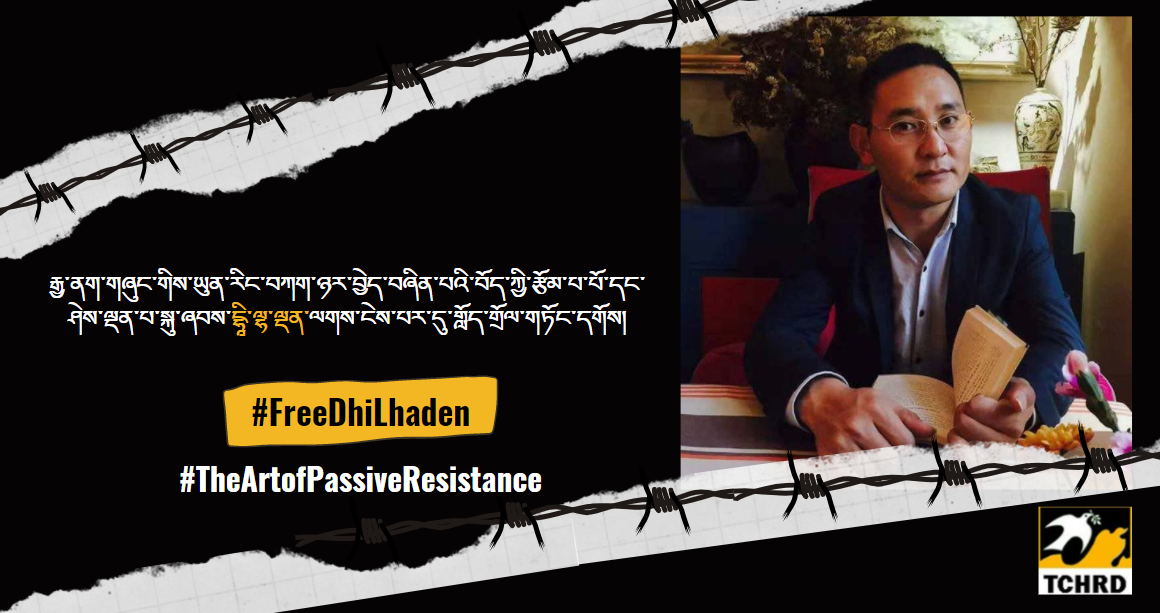
འདི་ག་བོད་ཀྱི་འགྲོ་བ་མིའི་ཐོབ་ཐང་དང་མང་གཙོའི་འཕེལ་རྒྱས་ལྟེ་གནས་ཁང་ནས་བོད་ནང་གི་རྩོམ་པ་པོ་ལྷ་ལྡན་ལགས་(སྨྱུག་མིང་དྷི་ལྷ་ལྡན་)རྒྱ་ནག་གཞུང་གིས་ཡུན་རིང་བཀག་ཉར་བྱས་མཐར་ཉེ་ཆར་ལོ་བཞིའི་བཙོན་འཇུག་ཁྲིམས་ཆད་བཏང་བའི་དངོས་བདེན་གྱི་གནས་ཚུལ་བྱུང་འདུག་པས་དྲང་བདེན་མ་ཡིན་པའི་ཐག་གཅོད་དེ་ལ་མཐའ་གཅིག་ཏུ་ངོ་རྒོལ་ཞུ་རྒྱུ་ཡིན་ཞིང་ཁོང་གི་སྨྲ་བརྗོད་རང་དབང་རྡོག་རོལ་བཏང་དང་གཏོང་བཞིན་པ་ངེས་པར་དུ་མཚམས་འཇོག་དགོས་པའི་འབོད་སྐུལ་ནན་པོ་ཞུ་རྒྱུ་ཡིན།
བོད་ཀྱི་འགྲོ་བ་མིའི་ཐོབ་ཐང་དང་མང་གཙོ་འཕེལ་རྒྱས་ལྟེ་གནས་ཁང་ངོས་ནས་ཟི་ཁྲོན་ཞིང་ཆེན་ཁྱབ་ཁོངས་ཁྲིན་ཏུའུ་གྲོང་ཁྱེར་གྱི་གསང་བའི་གནས་ཤིག་ཏུ་རྣམ་དཔྱོད་ལྡན་པའི་བོད་ཀྱི་རྩོམ་པ་པོ་གྲགས་ཅན་སྐུ་ཞབས་ལྷ་ལྡན་ལགས་རྒྱ་གཞུང་གིས་ལོ་གཉིས་རིང་ནས་གང་བྱུང་བཀག་ཉར་བྱས་དང་བྱེད་བཞིན་པར་ཁོང་གང་མྱུར་ཆ་རྐྱེན་ཅི་ཡང་མེད་པའི་ཐོག་ནས་གློད་གྲོལ་གཏོང་དགོས་པའི་རེ་འདུན་འདོན་གྱི་ཡོད།
The Tibetan Centre for Human Rights and Democracy (TCHRD) released yesterday the second book written by underground Tibetan writer Dhi Lhaden, the courageous former monk and intellectual based in Amdo, Tibet.
Originally composed in Tibetan and titled Tungol Trimtug (‘Resistance Through Cooperation With Law’), it has been translated into English with a new title ‘The Art of Passive Resistance’. This is Lhaden’s second book, translated and published by TCHRD.
In this book, Dhi Lhaden explores themes such as the rule of law, freedom, peace, equality, non-violence, and looks to public figures known for their approach of peaceful resistance such as the Dalai Lama, Gandhi, Martin Luther King Jr., and George Washington.

The Tibetan Centre for Human Rights and Democracy (TCHRD) is pleased to present an exclusive preview of Dhi Lhaden’s new book titled ‘The Art of Passive Resistance’, now translated into English.
Dhi Lhaden is a Tibetan monk, intellectual and writer born in 1980 at Dida Village in Pema (Ch: Baima) County, Golog (Ch: Guoluo) Tibetan Autonomous Prefecture (Qinghai Province), in the Tibetan province of Amdo. Originally named as Lhaden (popularly called Dhi Lhaden), he is also known by his ordained name, Thubten Lobsang Lhundup. At 11, he was admitted to his local monastery and four years later joined Serthar Buddhist Institute in Serta County, Kardze (Ch: Ganzi) Tibetan Autonomous Prefecture (Sichuan Province). At 28, he went to Lhasa for further studies at Drepung and Sera Monastery but had to cut his studies short.